
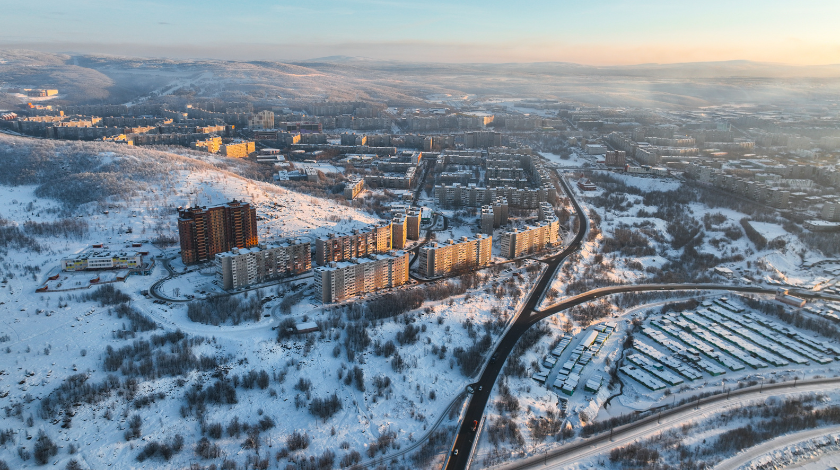
Let’s be honest. When most people think of visiting Russia, they picture the golden domes of Moscow’s Red Square or the imperial elegance of St. Petersburg. Very few have the Arctic at the top of their list. But that’s exactly why Murmansk is so special. It’s a city that doesn’t just feel different from the rest of Russia; it feels different from almost anywhere else on Earth. Perched nearly 150 miles north of the Arctic Circle, on the rocky shores of the Kola Bay, Murmansk isn’t just a city. It’s an experience, a statement of human resilience, and a front-row seat to some of nature’s most incredible performances.
I remember stepping off the overnight train from St. Petersburg, my breath forming thick clouds in the crisp, cold air. There was a profound quiet, broken only by the distant hum of the port. The light had a unique, slanted quality, even at noon. This was not the Russia I knew. This was something wilder, more raw, and infinitely more compelling.
A City Forged in the Fires of War
To understand Murmansk, you must start with why it’s here. Unlike ancient Russian towns, Murmansk is a teenager in historical terms, founded in 1916. Its birth was purely strategic. During World War I, Russia needed an ice-free port in the north to receive supplies from its allies, as the Baltic and Black Seas were blocked. The Gulf Stream’s last, warming gasp touches this part of the Arctic, keeping the waters of the Kola Bay from freezing solid in winter. That geographic quirk made a port possible, and a city was born.
But Murmansk’s true trial by fire came in World War II, known in Russia as the Great Patriotic War. From 1941 to 1944, it was one of the most bombed cities in the Soviet Union, second only to St. Petersburg. Why? Because it was the vital lifeline for the Arctic Convoys. British, American, and Canadian ships braved U-boats, bombers, and brutal seas to bring tanks, planes, and food to the Soviet Union through this port. Over four million tons of supplies landed here, crucial to the Eastern Front’s effort. The city was reduced to rubble, but it never fell. This sacrifice is etched into Murmansk’s soul.
You can’t miss the symbol of this sacrifice. Standing guard on a hill overlooking the city is Alyosha, the giant statue of a Soviet soldier. Officially called the Defender of the Soviet Arctic during the Great Patriotic War, but affectionately nicknamed Alyosha by everyone, this 35-meter tall colossus stares eternally west, towards the direction of the threat. Standing at his feet, looking out over the endless tundra and the city below, you get a visceral sense of what this place endured. The wind howls, the scale is immense, and the message of defiance is clear. It’s a humbling and powerful place.
The Giants of Technology: Nuclear Icebreakers
If Alyosha represents Murmansk’s past, the city’s modern identity is tied to another kind of giant: nuclear-powered icebreakers. Murmansk is the home port for Russia’s atomic icebreaker fleet, the mightiest in the world. These ships are the reason the Northern Sea Route along Russia’s Arctic coast is more than just a dream. They smash through multi-year ice several meters thick, clearing paths for cargo ships.
And you can actually go on one. The NS Lenin, the world’s first nuclear-powered surface ship, is now permanently docked in Murmansk as a fascinating museum. Stepping aboard is like entering a time capsule of Cold War-era optimism and engineering prowess. The corridors are narrow, the control panels are filled with analog dials and switches, and you can visit the (safely defueled) reactor room. It’s a stark contrast to the natural wilderness outside—a testament to human ingenuity in the planet’s harshest environment. Talking to a guide, a retired sailor, he told me with a sparkle in his eye about the feeling of power when the Lenin’s reactors would push the ship forward, grinding massive ice floes into submission. “We were not just sailing,” he said. “We were conquering.”
Dancing with the Light: Aurora and Polar Nights
Now, let’s talk about the main reason many adventurous travelers brave the cold: the Northern Lights, or Aurora Borealis. Murmansk is one of the most accessible major cities in the world for this celestial spectacle. From September through early April, when the nights are long and dark, your chances are good.
But here’s the thing you need to know. Seeing the Aurora is a hunt, not a guaranteed show. You need three things: solar activity, a clear sky, and darkness away from city lights. I spent three nights chasing them. The first two were frustrating, with overcast skies hiding any potential display. But on the third night, our guide drove us out to the frozen tundra, away from Murmansk’s glow. We stood in the deep snow, in a silence so complete it rang in our ears. And then, a faint green smear appeared on the horizon. It grew, shimmered, and suddenly erupted into ribbons of emerald and violet that danced across the entire dome of the sky. They pulsed, faded, and surged again for nearly an hour. No photo or video does it justice. The feeling is one of pure, childlike wonder. It’s cold, your feet are freezing, but you cannot look away.
This spectacular darkness has a flip side: the Polar Night. From early December to mid-January, the sun does not rise above the horizon at all. The city exists in a perpetual, deep blue twilight for weeks. Locals combat the “polar night sickness” with vitamins, strong lights, and community. Then, in summer, comes the payoff: the Midnight Sun. From late May to late July, it never gets dark. You can be reading a book outside at 2 a.m. in broad daylight. It’s disorienting, exhilarating, and gives the city a burst of incredible energy. I visited in June and found myself playing chess with a local in a park at 11 p.m., in full sunshine. It’s an experience that completely warps your sense of time.
Experiencing the City: More Than Just Ice
Beyond the big-ticket items, Murmansk has a quiet, gritty charm. Take a stroll along Lake Semyonovskoye, a favorite local spot for walks and ice fishing. Visit the Murmansk Regional Museum to get a deep dive into Sami culture (the indigenous people of the Kola Peninsula), Arctic wildlife, and the city’s founding.
For a taste of local life, head to the central market. It’s a bustling place filled with the bounty of the north: fresh and smoked fish from the Barents Sea like cod and halibut, delicious cloudberries and lingonberries from the tundra, and hearty, simple foods meant to fuel a body against the cold. Try a warming bowl of borscht or some local pastries.
A word on logistics. Getting to Murmansk is easier than you think. There are regular flights from Moscow and St. Petersburg, and the aforementioned overnight train from St. Petersburg is an adventure in itself—a two-day journey through endless forests and past remote lakes. For accommodation, there are a range of hotels, from Soviet-era classics to more modern options. The people, in my experience, are wonderfully direct and hospitable once you break the initial ice. They are proud of their unique home and often curious about why you’ve chosen to visit it.
Conclusion: The Unyielding Arctic Charm
Murmansk is not a conventionally “pretty” city. It’s a functional, tough port town with a lot of Soviet-era concrete architecture. But its beauty lies in its context, its history, and the sheer force of nature that surrounds it. It’s in the golden light of the midnight sun painting the apartment blocks, in the eerie blue of the polar noon, in the solemn gaze of Alyosha, and in the electric dance of the Aurora over the nuclear icebreakers in the bay.
It’s a place that makes you feel small in the best possible way—reminding you of the vastness of our planet, the power of its elements, and the incredible adaptability of human life. You come to Murmansk not for luxury, but for authenticity. You come to stand at the edge, to feel the Arctic wind on your face, and to understand a corner of the world where life is lived vividly against a spectacular, formidable backdrop. It’s a journey that stays with you, long after you’ve thawed out.
Frequently Asked Questions (FAQ)
Q: What is the best time to visit Murmansk to see the Northern Lights?
A: The prime season is from late September to early April, when the nights are long and dark. The peak months for intense solar activity are often around the equinoxes (September/October and February/March), but clear skies are your most important factor.
Q: How cold does it get in Murmansk?
A: Winters are long and cold, with average January temperatures around -10°C (14°F), but it can easily drop to -20°C or -30°C (-4°F to -22°F). Summers are short and cool, with July averages around +12°C (54°F). The key is the wind, which can make it feel much colder.
Q: Do I need a visa to visit Murmansk?
A: Yes. Murmansk is in Russia, so most foreign visitors will require a tourist visa. The process involves an invitation from a licensed Russian tour operator or hotel. Always check the latest requirements with your local Russian consulate well in advance.
Q: Is Murmansk safe for tourists?
A: As a major city, normal travel precautions apply. The city center and main tourist areas are generally safe. However, the extreme climate is the primary safety concern. Proper clothing, careful planning for outdoor excursions (especially for Northern Lights viewing), and heeding local advice about weather conditions are essential.
Q: Can you visit the nuclear icebreakers?
A: Yes! The NS Lenin, the first nuclear icebreaker, is a fantastic and highly recommended museum ship. Access to the active icebreaker fleet is restricted, but you can sometimes book organized boat tours in the harbor to see them from the water.
Q: What is the Polar Night like? Is it completely dark all day?
A: During the peak of the Polar Night (around late December), the sun does not rise. However, it is not pitch black 24 hours a day. There are a few hours of twilight around midday, offering a deep blue or dusky light. Street lights and building lights remain on throughout the “day.”