
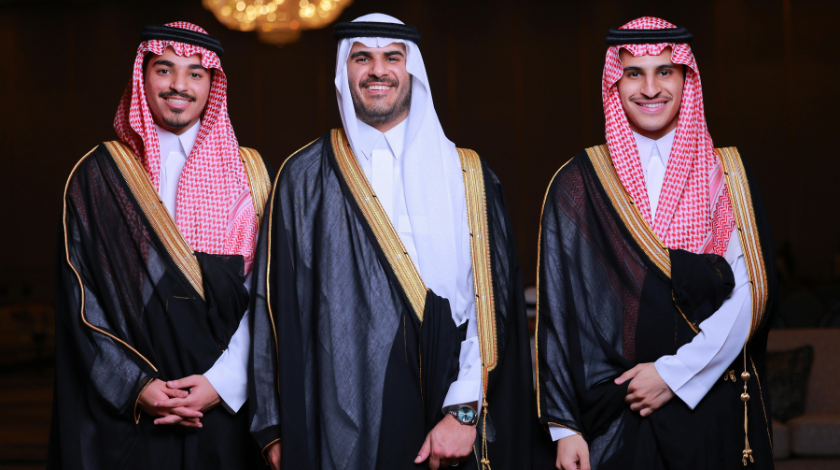
Let’s be honest. When you hear the word “Arab,” what’s the first image that pops into your head? If you’re like I was years ago, before I lived in the region and married into an Arab family, your mind might conjure a single, dusty picture from the news. Maybe it’s a desert, maybe it’s a political headline. But here’s the truth I discovered, one that changed my perspective completely: that single image is a fiction. The Arab world is not a monolith. It’s a breathtakingly diverse, vibrant, and deeply human mosaic of over 400 million people, bound less by sand and more by a shared heartbeat of language, culture, and warmth.
So, what does it actually mean to be Arab? This is the question we’ll unravel together. Think of this not as a textbook lesson, but as a conversation over a tiny cup of fragrant Arabic coffee. We’ll spill some, drink a lot, and hopefully, by the end, you’ll see the Arab world through a richer, more colorful lens.
Who Are the Arabs? It Starts with a Word, Not a Look
This is the most important point to grasp, and it’s where many get tangled. “Arab” is primarily a linguistic and cultural identity. It’s not a “race.” You can’t identify an Arab solely by features, as Arabs can have light skin, dark skin, black hair, blonde hair, blue eyes, or brown eyes. The core, historical definition is someone whose native language is Arabic and who identifies with the cultural traditions of the Arab world.
Imagine it like this: Being “Hispanic” is tied to the Spanish language and a spectrum of cultures from many countries. Similarly, being “Arab” is anchored in the Arabic language and a shared cultural heritage that stretches from the Atlantic coast of Morocco to the shores of the Arabian Gulf. This means an Arab Christian from Lebanon, an Arab Muslim from Egypt, and an Arab Jew from Yemen—all part of the historical tapestry—are connected by this linguistic and cultural thread, despite their different faiths. It’s an inclusive, not exclusive, identity.
A Map of Many Colors: The Geography of the Arab World
When we say “Arab world,” we’re talking about the 22 countries that make up the Arab League, spanning the colossal region of the Middle East and North Africa (MENA). But within that map is a world of difference. The bustling, Mediterranean-facing cities of Beirut and Tunis feel continents apart from the skyscraper landscapes of Dubai and Doha, which in turn are vastly different from the ancient, Nile-centered life of Cairo or the mountain villages of Oman.
The landscape is just as diverse: the vast Sahara Desert, the fertile Nile and Euphrates valleys, the snow-capped mountains of Lebanon and Morocco, and the pristine beaches of the Red Sea. This geographic diversity has shaped unique local customs, accents, cuisines, and even senses of humor. The food alone tells the story: the spicy, complex flavors of Yemeni mandi are a universe away from the subtle, herb-filled dishes of Levantine cuisine like tabbouleh. To lump them all together is like saying Italian pasta and German schnitzel are the same because both are European.
The Golden Threads: Hospitality, Family, and Community
If there is a unifying cultural code, a set of golden threads running through this diverse tapestry, it is the profound values of hospitality, family, and community. Arab hospitality, or diyafah, isn’t just politeness; it’s a sacred duty. I learned this firsthand during my first visit to my husband’s family in Jordan. I was a stranger, but within minutes, I was treated like a long-lost relative. The table groaned with food—mansaf, the national dish of rice and lamb, piles of warm bread, endless bowls of salads and dips. “Eat!” they insisted, their faces beaming with genuine pleasure at sharing what they had. Saying “no thank you” was not an option; it would be a slight against their generosity. This warmth is extended to friends, friends of friends, and even passing guests. It’s a social contract of kindness that I find deeply beautiful.
At the center of this is the family, the bedrock of Arab society. It’s typically extended, not just nuclear. Grandparents, aunts, uncles, and cousins are part of the daily fabric of life. Respect for elders is paramount, and family bonds provide a crucial support network. Decisions, from education to marriage, are often considered family matters. This can sometimes clash with more individualistic Western ideals, but at its heart, it creates a powerful sense of belonging and security. You are never just you; you are a son, a daughter, a cousin, an integral part of a whole.
The Language of Poetry and Connection
Arabic is the soul of this identity. It’s not just a tool for communication; it’s a vessel for history, poetry, and faith. There’s a fascinating duality to it. Modern Standard Arabic (MSA) is the formal, uniform language of news, literature, and official documents—it’s what unites the different countries in writing. But then there are the dialects. Egyptian Arabic, thanks to decades of cinema, is widely understood across the region. Levantine Arabic (from Syria, Lebanon, Jordan, Palestine), Gulf Arabic, North African Arabic (Darija)—each is almost a language unto itself, rich with local flavor, borrowed words, and unique pronunciations.
Learning even a few phrases opens doors. A simple “Ahlan wa sahlan” (Welcome) or “Kayf halak?” (How are you?) sparks instant smiles. The language is famously expressive and poetic. Prose is adorned with metaphor, and everyday conversations can feel lyrical. This love for language culminates in the deep cultural reverence for poetry, from the pre-Islamic Jahiliyyah verses to the modern works of Mahmoud Darwish. To understand Arabs, one must appreciate their profound connection to the power of the spoken and written word.
A Walk Through History: From Ancient Trade to Global Ideas
Arab history didn’t begin with Islam in the 7th century, but that period was a catalyst for a civilization that would change the world. From the Arabian Peninsula, a new era flourished. The Islamic Caliphates, particularly the Abbasid in Baghdad, became the world’s center of learning during what’s often called the Golden Age. While Europe was in its early medieval period, Arab scholars (who were of diverse faiths) were preserving, translating, and building upon the knowledge of the Greeks, Persians, and Indians.
They made staggering contributions. Algebra (from the Arabic al-jabr), algorithms (from the scholar Al-Khwarizmi), advances in astronomy, medicine (Ibn Sina’s Canon was a textbook for centuries), optics, and chemistry all have deep roots in this period. They didn’t just keep knowledge alive; they revolutionized it. This historical fact is a powerful antidote to negative stereotypes. It reminds us that this culture has been, for centuries, a beacon of scientific inquiry, philosophical debate, and artistic innovation.
The Modern Arab: Navigating a World of Contrasts
Today’s Arab world is a dynamic space of contrasts, constantly negotiating the pull of tradition and the push of modernity. This is most visible in the youth—a huge demographic. They are globally connected through social media, often fluent in multiple languages, and driving new waves in entrepreneurship, tech start-ups, and contemporary art. Cities like Cairo, Amman, and Riyadh have thriving scenes for filmmakers, musicians, and designers who are telling their own stories, on their own terms.
Yet, they do this while often maintaining a deep respect for their cultural roots. It’s not an either/or choice. You might see a young woman in a modern dress and a stylish hijab (headscarf) coding at a tech incubator. You might meet a young man who listens to both Travis Scott and the legendary Egyptian singer Umm Kulthum. They face real challenges—political tensions, economic hurdles, and sometimes societal restrictions—but their creativity and resilience are shaping the future. The narrative of the Arab world is not stuck in the past; it is being written every day by this ambitious, complex generation.
Conclusion
So, who are the Arabs? They are poets and programmers, Bedouins and bankers, artists and aunties who make the best stuffed grape leaves you’ll ever taste. They are defined by a beautiful, complex language, a culture of generous hospitality, and a history that has contributed profoundly to human civilization. They are diverse in every conceivable way—faith, appearance, custom, and thought. To reduce them to a stereotype is to miss the entire, magnificent picture.
My own journey into this world has been the greatest education of my life. It has taught me that understanding comes from peeling back the layers of headlines and engaging with the human stories underneath. It’s in the shared laughter over a meal, the struggle to learn a new dialect, and the quiet respect for age-old traditions. The Arab world, in all its vibrant, complicated, and welcoming glory, defies simple definitions. And that is precisely what makes it so fascinating.
Frequently Asked Questions (FAQ)
Q1: Are all Arabs Muslim?
A: Absolutely not. While Islam is the majority religion and a major cultural influence, there are millions of Arab Christians (concentrated in countries like Egypt, Lebanon, Syria, and Palestine), Arab Jews, and people of other faiths or no faith. Religious diversity is a historical and present reality in the Arab world.
Q2: What is the difference between the Middle East and the Arab world?
A: The Middle East is a geopolitical region that includes non-Arab countries like Iran, Turkey, and Israel. The Arab world is a cultural-linguistic region consisting of countries where Arabic is the official language. Most Arab countries are in the Middle East and North Africa.
Q3: Why is there so much conflict in the Arab world?
A: This is a complex question with no single answer. Factors include colonial-era border drawings that ignored ethnic groups, competition over resources like oil and water, geopolitical rivalries, struggles over governance, and foreign interventions. It’s crucial to avoid simplistic cultural or religious explanations.
Q4: How can I be respectful when interacting with Arab culture?
A: Simple gestures go a long way. Use your right hand for eating and greeting. Dress modestly when visiting religious sites or conservative areas. Accept offers of coffee or tea—it’s a sign of friendship. Show respect for elders. A little effort to learn basic Arabic greetings is always appreciated. Above all, come with an open mind and a willingness to learn.
Q5: Is it hard to learn Arabic?
A: It can be challenging for English speakers due to a different alphabet and grammar structures. However, starting with a specific dialect for speaking (like Egyptian or Levantine) can be very practical and rewarding. The script can be learned in a few weeks. The key is patience and consistent practice.