

Have you ever heard of palladium? If you haven’t, you’re not alone. For decades, it lived in the shadow of its flashier cousins, gold and platinum. But here’s a funny thing. I once helped a friend sell an old, broken piece of jewelry. We thought it was silver, but a jeweler’s test revealed it was actually palladium. That tiny piece was worth significantly more than we imagined. It made me curious. What is this metal that’s so valuable, yet so few people can point it out?
As it turns out, palladium is a silent workhorse of the modern world. It’s probably within a few feet of you right now. If you’re in a car, it’s cleaning the exhaust coming out of the tailpipe. If you have a smartphone or computer nearby, there’s a tiny bit of palladium helping it function. This unsung hero is one of the rarest and most useful metals on Earth. Let’s pull back the curtain and explore the fascinating world of palladium, in words anyone can understand.
What is Palladium? A Simple Explanation
Let’s start with the basics. Palladium is a chemical element. You can find it on the periodic table with the symbol Pd and the atomic number 46. It’s part of a prestigious family known as the Platinum Group Metals (PGMs), which includes platinum, rhodium, ruthenium, iridium, and osmium.
Physically, it’s a shiny, silvery-white metal. But its superpowers aren’t in its looks; they’re in its properties. Palladium is:
-
Incredibly durable: It doesn’t tarnish or corrode in air, unlike iron that rusts.
-
Remarkably malleable: An ounce of it can be stretched into a thread over 100 miles long! This makes it fantastic for delicate electrical components.
-
An excellent catalyst: This is its most important trait. A catalyst is a substance that speeds up a chemical reaction without being used up itself. Palladium is like a master negotiator, making difficult reactions happen smoothly and efficiently.
It was discovered in 1803 by an English chemist, William Hyde Wollaston. He named it after the recently discovered asteroid, Pallas Athena, the Greek goddess of wisdom. It seems fitting for such a clever metal.
Where Do We Find Palladium? Mining and Sources
Palladium isn’t lying around in big, pure chunks. It’s one of the Earth’s rarer elements. Most of it is mined as a byproduct of other metals. Imagine you’re mining for nickel or platinum. Palladium is like a bonus prize you find along the way.
The geography of palladium is very concentrated. Russia and South Africa together account for about 75-80% of the world’s primary production. This concentration in just a couple of regions is a big part of the story behind its price and supply concerns. Smaller amounts come from Canada, the United States, and Zimbabwe.
Mining it is complex, energy-intensive, and expensive. The ore has to be crushed, treated, and put through a series of chemical processes to separate the tiny amounts of palladium from everything else. It can take several tons of ore to produce just one ounce of pure palladium. When you understand this struggle, its value starts to make more sense.
The Top Uses of Palladium: From Cars to Jewelry
So, why do we go through all this trouble to get it? Because palladium is absolutely vital to several key industries.
The Catalytic Converter: Palladium’s Biggest Job
This is, without a doubt, palladium’s most critical application. About 80-85% of all palladium demand goes into making catalytic converters for gasoline-powered cars. That box in your exhaust system is a pollution-fighting marvel.
Here’s how it works, in simple terms: Your car’s engine produces harmful gases like carbon monoxide, nitrogen oxides, and unburned hydrocarbons. The catalytic converter’s interior is a honeycomb structure coated with a fine layer of precious metals—primarily palladium, along with platinum and rhodium.
As the hot exhaust gases pass over this palladium-coated honeycomb, a catalytic reaction occurs. Palladium helps convert those toxic pollutants into less harmful substances: carbon dioxide, nitrogen, and water vapor. It doesn’t get used up in the process; it just keeps making the reaction happen for thousands of miles. Stricter global emission standards mean modern cars need more of this magical metal to keep our air clean. That’s the single biggest driver of palladium demand.
Palladium in Electronics and Technology
Look at any modern device with multilayer ceramic capacitors (MLCCs)—which is almost every piece of consumer electronics—and you’ll find palladium. These tiny components are the unsung heroes of your smartphone, laptop, television, and gaming console. They store and regulate electrical charge, and palladium is used in their electrodes because of its superb conductivity and stability.
It’s also used in connector platings for aerospace technology and in some specialized surgical and dental instruments. Its reliability is non-negotiable in these fields.
The Rise of Palladium Jewelry
This is a personal favorite of mine. Around the early 2000s, jewelers began promoting palladium as a premium alternative for white gold and platinum. Why? It’s naturally bright white, so it doesn’t need rhodium plating (like white gold does) to stay looking silver. It’s also lighter than platinum, hypoallergenic, and very strong.
I have a palladium wedding band, and after years of daily wear, it still looks exactly as it did on day one—no scratches, no yellowing, just a comfortable, bright shine. For anyone looking for a durable, beautiful, and often more affordable white precious metal, palladium is a fantastic, though still under-the-radar, choice.
Palladium vs. Platinum: What’s the Difference?
They’re siblings, so they’re often confused. Both are silvery-white, hypoallergenic, and used in jewelry and industry. But they have key differences:
-
Weight: Platinum is significantly denser and heavier. A palladium ring will feel lighter than an identical-sized platinum one.
-
Color: Palladium has a naturally slightly grayer tone than the pure, bright white of platinum, though both are beautiful.
-
Price: Historically, platinum was more expensive. However, since about 2017, palladium’s price has consistently traded above platinum’s due to its massive automotive demand. This was a huge shock to the market!
-
Industrial Use: Platinum is crucial for diesel catalytic converters and hydrogen fuel cells. Palladium rules the gasoline catalytic converter world.
Investing in Palladium: Is It Right for You?
Seeing its price chart can be dizzying. It’s one of the most volatile commodity markets. If you’re considering it as an investment, you need to understand what moves it.
The price is a constant tug-of-war between limited supply (from those few mining countries) and strong demand (mostly from the auto industry). Any news about mine disruptions in South Africa, export quotas from Russia, or a global shift towards electric vehicles (which don’t use palladium converters) can send the price swinging wildly.
How can people invest?
-
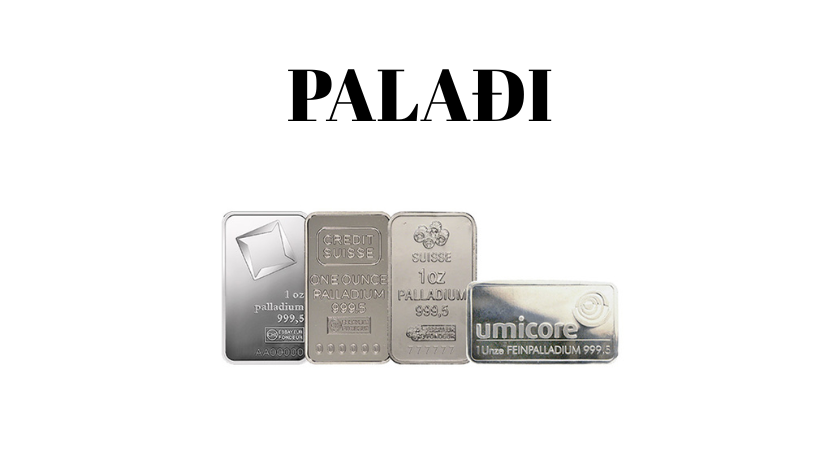
Physical Metal: You can buy palladium bars or coins from reputable dealers. Storage and insurance are important considerations.
-
ETFs (Exchange-Traded Funds): Funds like PALL hold physical palladium bullion. Buying a share is like owning a small piece of that metal without having to store it yourself. This is the most common way for everyday investors to get exposure.
-
Mining Stocks: Investing in companies that mine palladium. This is riskier, as it ties you to the company’s performance, not just the metal’s price.
My opinion? For the average beginner, palladium is a speculative investment, not a stable store of value like gold. It’s for the portion of your portfolio you’re willing to watch closely. I’d never suggest putting your life savings into it, but understanding its role can make you a more informed observer of the global economy.
The Future of Palladium: Sustainability and Recycling
The future has two major themes: uncertainty and recycling.
The rise of electric vehicles (EVs) is the biggest question mark. An EV has no exhaust, so it needs no catalytic converter. As EV adoption grows, demand from the auto sector could fall. However, this transition will take decades, and hybrids still use palladium. In the meantime, tighter emissions laws on the billions of existing gasoline cars support demand.
This makes recycling more critical than ever. Palladium is almost 100% recyclable. “Urban mining”—recovering palladium from old catalytic converters and electronic scrap—is a massive and growing industry. In fact, recycled palladium now supplies about 25-30% of the annual market supply. It’s less energy-intensive than primary mining and creates a more circular, sustainable lifecycle for this precious resource. The piece I helped my friend sell? That was a tiny part of this important recycling stream.
Conclusion
Palladium is a perfect example of how a seemingly obscure element can be fundamental to our daily lives. It cleans the air we breathe, powers the devices we communicate with, and adorns us with beauty and durability. Its story is one of chemistry, geology, economics, and technology all woven together. It’s a metal of paradox—incredibly rare yet ubiquitous, hugely valuable yet largely invisible. The next time you start your car or glance at your phone, remember the tiny amount of remarkable palladium inside, working quietly to make the modern world run a little smoother and a lot cleaner.
Frequently Asked Questions (FAQ)
Q1: Is palladium radioactive?
A: No, palladium is not radioactive. It is a stable, safe metal used in many everyday applications, including jewelry and medical devices.
Q2: How can I tell if my jewelry or item is palladium?
A: Look for hallmarks. Pure palladium is often marked as “Pd950” (95% pure) or “Pd999” (99.9% pure). A qualified jeweler can perform a simple acid test to confirm.
Q3: Why did palladium become more expensive than gold and platinum?
A: The main reason is a sustained supply deficit. Strong, steady demand from the global auto industry (for catalytic converters) has consistently outstripped the amount of new palladium being mined and recycled for years.
Q4: Does palladium get scratched easily?
A: Like all metals, it can develop a patina of fine scratches over time with heavy wear. However, it is a hard and durable metal. My own palladium ring shows minimal wear after years of use.
Q5: Are there alternatives to palladium in catalytic converters?
A: Automakers are always researching. Platinum is the closest substitute and can be used in some formulations, but it’s not a perfect one-to-one swap. Engine designs and chemistry are often optimized for a specific metal mix. Reducing or replacing palladium is a major engineering challenge.